Siloed tools
Data and capability remain trapped in separate workflows.

Platform / Mission Fabric
A common operational fabric for complex, multi-system missions.
Mission Fabric connects systems, processes, people, places, and things into one interoperable, scalable, and contextual ecosystem—without replacing the tools already in operation.
01 / The mission seam
Every capability may work. The mission can still lose context when people, data, assets, and decisions cross system boundaries.
Mission Fabric supplies the common identity, trust, and orchestration layer across those seams. Existing systems remain authoritative. The fabric resolves what they are, how they relate, and what the mission needs next.
02 / The Infrastructure Difference
The difference between connecting individual capabilities and orchestrating a mission.
Traditional systems
Siloed. Delayed. Reactive.
Data and capability remain trapped in separate workflows.
Information arrives incomplete, late, or without identity.
People reconcile systems and rebuild relationships.
Teams respond after mission state has already changed.
Every new capability creates more custom integration.
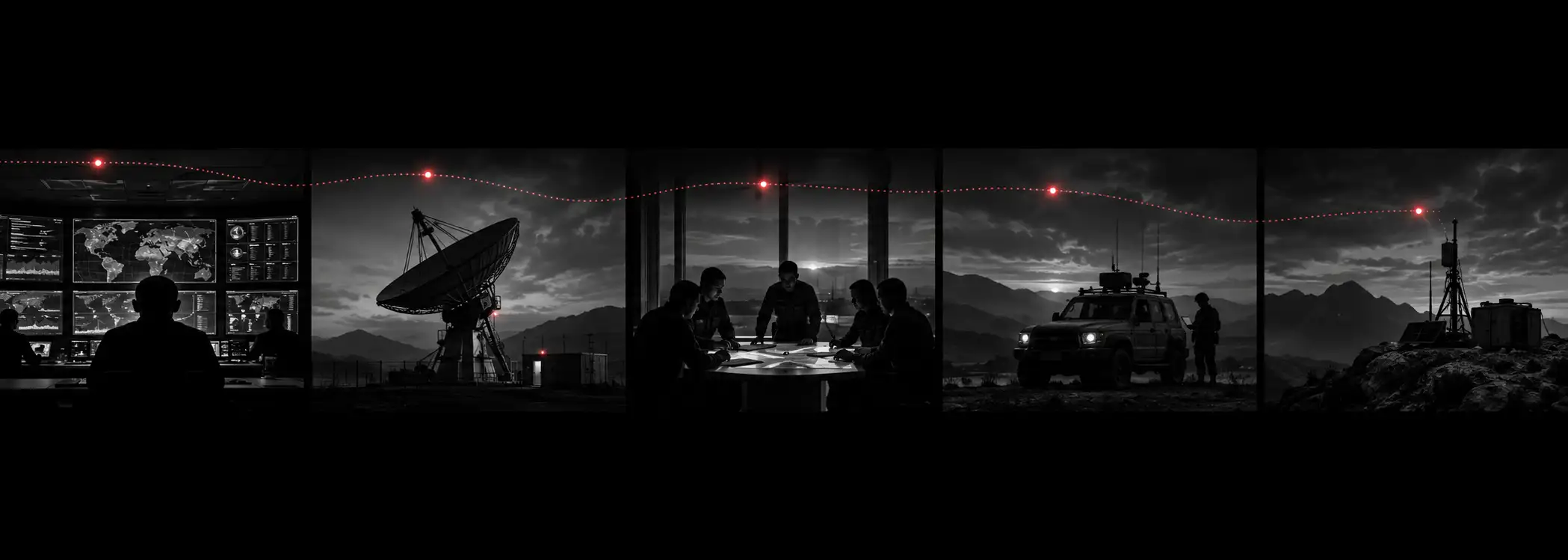
Fragmented systems react.
Each handoff creates delay, ambiguity, and risk.
Mission Fabric
Unified. Real-time. Adaptive.
Connect data, systems, assets, and teams in one fabric.
Live, trusted mission state flows across boundaries.
Coordinate decisions and actions across the mission stack.
Resolve change early and keep operations aligned.
Compose new capabilities without rebuilding the mission.
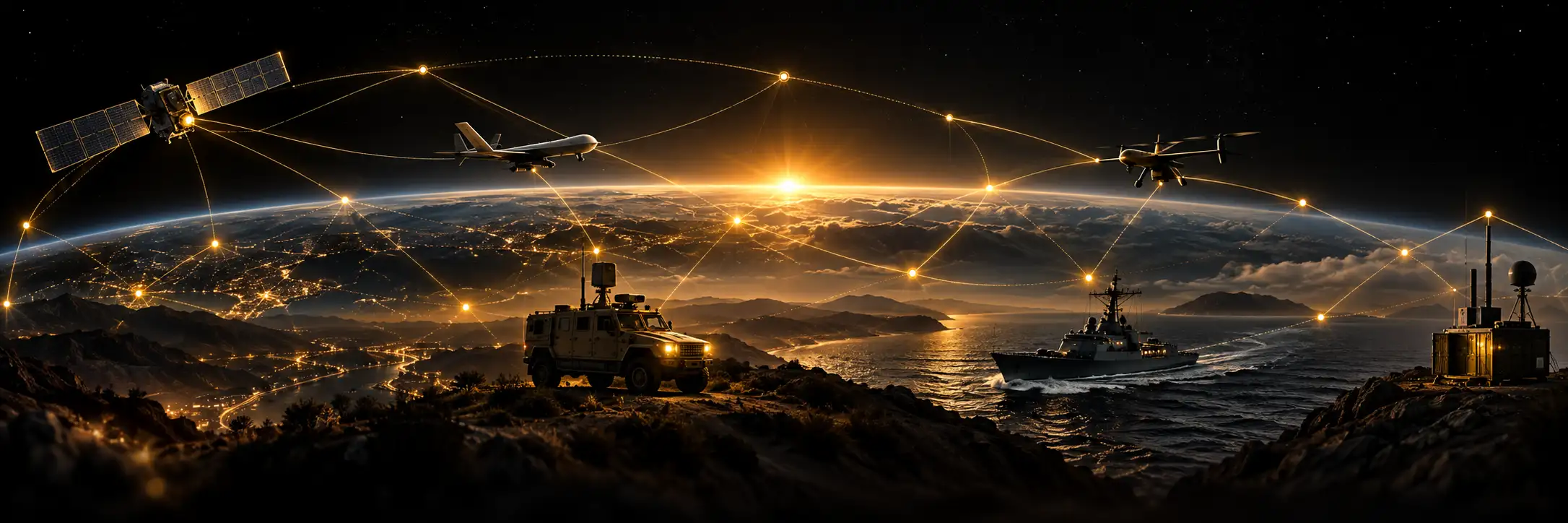
Mission Fabric anticipates.
Context moves with the mission as conditions change.
03 / The orchestration stack
Identity tells the fabric what something is. Context and trust define its boundaries. Rigs define composition. Mission Fabric turns those foundations into coordinated operations.


A durable operational address for every person, place, thing, payload, process, and digital representation.


Dynamic Spheres of Influence determine what can be discovered, shared, and acted upon in mission context.


Operational objects contain their components, payloads, sensors, state, dependencies, and complete mission history.
Common operational layer
MISSION FABRIC
04 / Operational planes
The same entity can participate across physical operations, logical systems, plans, command structures, and simulation—without losing its persistent identity.
Assets, environments, coordinates, sensors
Systems, data, services, relationships
Intent, manifests, workflows, dependencies
Authorities, actions, control, permissions
Digital twins, models, futures, rehearsal
05 / Missions + manifests
Missions define the operational objective and context. Manifests assemble the people, places, Rigs, payloads, sensors, systems, routes, tasks, and permissions required to execute it.
MISSION
Objective, timeline, operating context
MANIFEST
Assigned capabilities and relationships
RIG
Composed assets, payloads, and state
eVa + SoI
Persistent identity and governed access
Mission composition
People, places, systems, and assets become one executable mission context.
Interoperability by design
Every system stays authoritative. Mission Fabric makes the mission interoperable.
06 / Connect, don't replace
Mission Fabric connects through APIs, event streams, adapters, files, edge gateways, and human workflows. It adds persistent identity and shared context above the tools already trusted for operations.
07 / Common mission context
Systems + capabilities
MISSION FABRIC
IDENTITY / TRUST / ORCHESTRATION
Mission context
08 / Live operations
Mission Fabric provides a living operational view that adapts in real-time as missions evolve, assets move, and conditions change.
Watch assets move in real-time across the operational environment. Every position update, status change, and event is correlated with the asset's persistent identity and mission context.
TELEMETRY
Position, velocity, status, and sensor data in real-time
CONTEXT
Relationships, dependencies, and mission state always current
09 / Operational outcomes
Mission identity and history persist as assets, teams, systems, and environments change.
Capabilities exchange context through the fabric without surrendering ownership or authority.
New systems, missions, and operational domains join without rebuilding the architecture.
Every user and system receives the relationships needed for the decision at hand.
Many capabilities. One mission.